Should I Start a Consulting Business? 6 Productive Tips
Starting a Consulting Business is One of Those Ideas That Often Begins Quietly.
It often starts as a quiet thought during a commute or a late-night question you keep circling back to: “Should I start a business consulting practice?”
That question carries more weight than it sounds. Because underneath it sits a second, quieter one most people never ask out loud: “And if I do, how will anyone find me?”
That second question is where most new consultants stumble. They make the leap, do great work, and then wait. They wait for referrals, for word of mouth, for something to happen. Sometimes it does. But more often, the pipeline stays thin.
Here is the truth that changes everything: LinkedIn for business growth is not a nice-to-have for business consulting. It is the infrastructure. The difference between a practice that grows by accident and one that grows by design.
I co-hosted a podcast with Mel Loy called Re-inventors: Consulting Conversations over Coffee, a 10-episode series built for freelancers and consultants at every stage. Honest, practical, grounded in real experience. No hype. No shortcuts.
This article is the written companion to those conversations. It covers six foundational realities of business consulting and, woven through each one, the specific role LinkedIn for business growth plays at every stage.
How Do You Know When You’re Ready to Start Consulting?
There is no perfect moment to start a consulting business and that’s one of the first truths aspiring consultants need to accept.
Many people feel ready when:
- They no longer desire an in-house role
- They want more than “safe” or predictable career paths
- They’re craving autonomy, creativity, or variety
That said, readiness isn’t just emotional. It’s also practical.
A smart way to approach consulting is to treat it as an experiment.
If it works, you build on it. If it doesn’t, you can always return to employment. There’s no failure in testing the waters.
But there are a few grounded realities to keep in mind, such as the fact that there will never be a perfect time, but there are terrible times, financial planning matters more than optimism, and you don’t need to quit your job immediately!
Starting as a side hustle can be a powerful and low-risk way to begin.
Many consultants find that several years of experience, combined with a solid contact list, makes the transition far smoother.
Above all, think carefully about income, risk, and sustainability before going all in.
Selling Without Feeling “Salesy”: The Mindset Shift
One of the most common challenges in business consulting is discomfort around self-promotion. It feels like bragging. It feels like something other people do, not you.
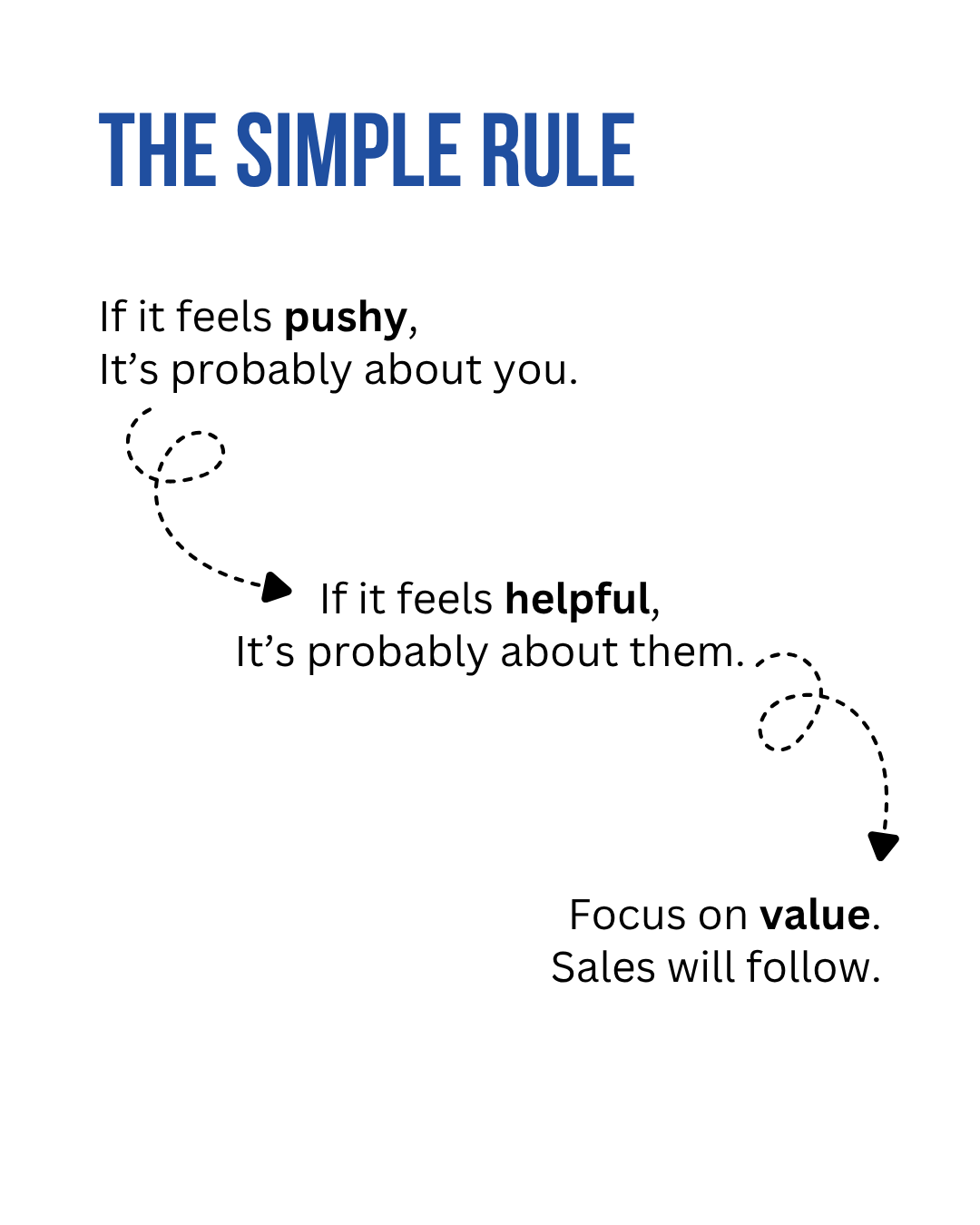
Here is the shift that makes it easier: it is not about selling yourself. It is about providing value.
When you consistently share useful knowledge and honest perspectives, trust follows naturally. And trust is what drives business consulting, not a polished pitch deck.
What This Looks Like in Practice
Instead of focusing on who you are, shift your focus to:
- The problems you help solve (be specific, not vague)
- The transformation you offer (what changes after working with you?)
- The perspective you bring (what do you see that others miss?)
This is exactly where storytelling techniques for LinkedIn become one of your most powerful tools. When you share a real story from your consulting experience, a challenge navigated, a lesson learned, you are not selling. You are demonstrating. And demonstration is far more persuasive than any sales copy.
Generosity is one of the most effective growth strategies in business consulting. Show up consistently with value, and the sales conversations take care of themselves. The people who feel most “salesy” are usually the ones who only appear when they want something. The ones who show up every week with something useful never feel that way.
Visibility Is Not Optional in Consulting
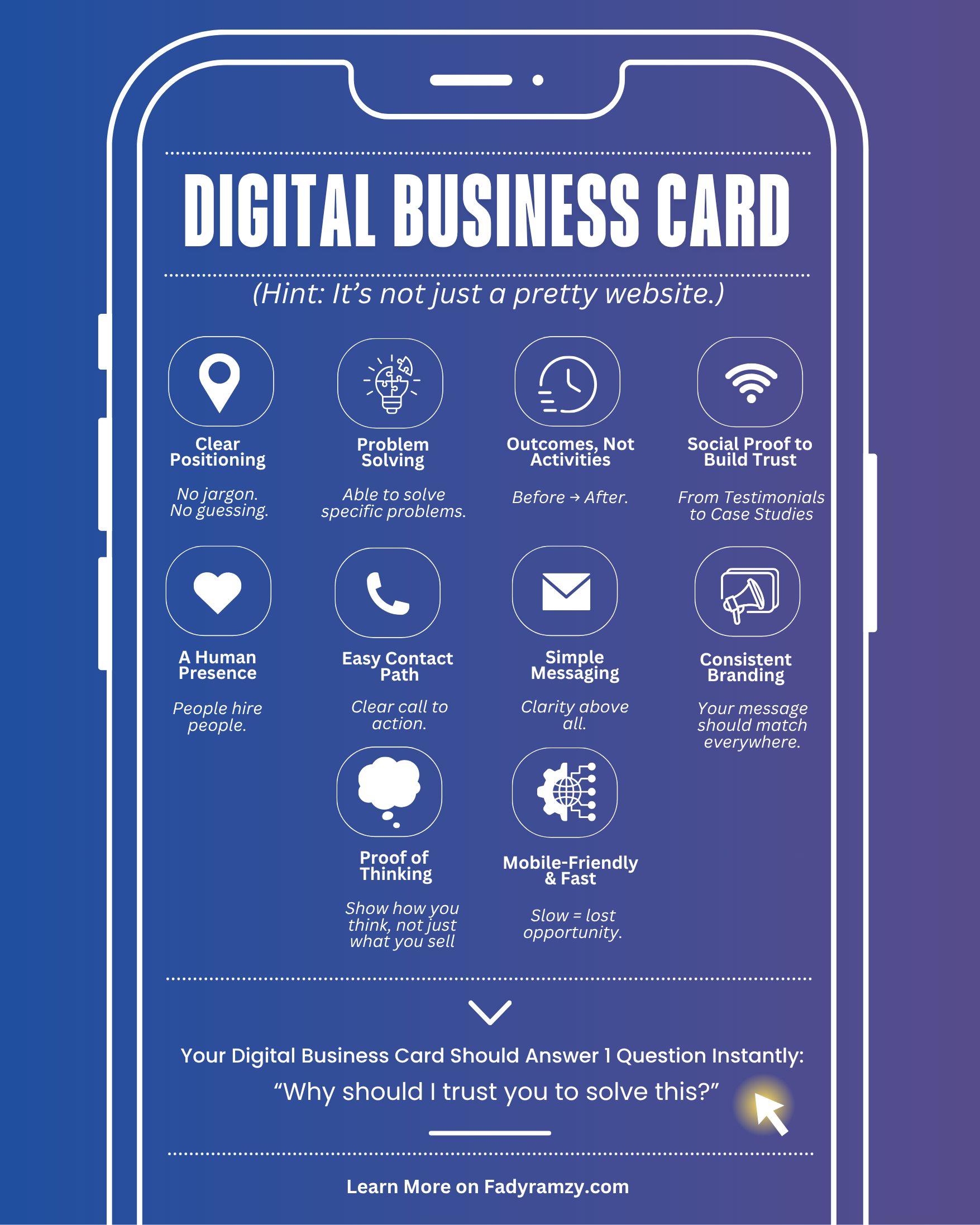 Your online presence is your digital business card. At a minimum, people should be able to understand: Who you help, What you offer, and How to contact you.
Visibility isn’t about being everywhere. It’s about being useful where it matters. But this is what you need: LinkedIn, A website, and A blog or newsletter.
A good litmus test? Pay attention to:
- The people you follow
- The content you enjoy
- The books, podcasts, and posts that resonate with you
Just as importantly, notice what turns you off. That awareness quickly reveals the dos and don’ts of effective consulting content.
Sell Outcomes, Not Services
Clients do not always think the way consultants do. When you present your services as a list with prices, clients treat them like items on a menu. They compare. They negotiate on price. They ask “why is this so expensive?” instead of “how soon can we start?”
The shift is simple: stop selling services and start selling outcomes.
Three Questions That Reframe Every Client Conversation
Before any proposal, be able to answer these clearly:
- What changes for the client after working with you?
- What problem disappears?
- What becomes easier, clearer, or more effective?
These are the foundation of your positioning in business consulting, and they connect directly to your LinkedIn for business growth strategy. When your content consistently demonstrates the answers to these three questions through case studies and honest reflections, potential clients arrive at a conversation already convinced.
This is also why defining your personal value proposition matters before you start creating content. When you know exactly who you help and how you uniquely solve their problem, every post becomes a piece of evidence, not a sales pitch.
The real insight: Clients who feel genuinely transformed by your business consulting do not just come back. They send others. And when they engage with your LinkedIn content, that social proof reaches their network, creating organic reach that no paid advertising can replicate.
Think Like a Business Owner, Not a Freelancer
Business consulting is not just a job. It is a business. And that requires a mindset shift that catches a lot of people off guard.
You are no longer just delivering work. You are running operations, managing time, and building systems. The skills that made you excellent inside an organization are necessary but not sufficient. You now need to think like an owner.
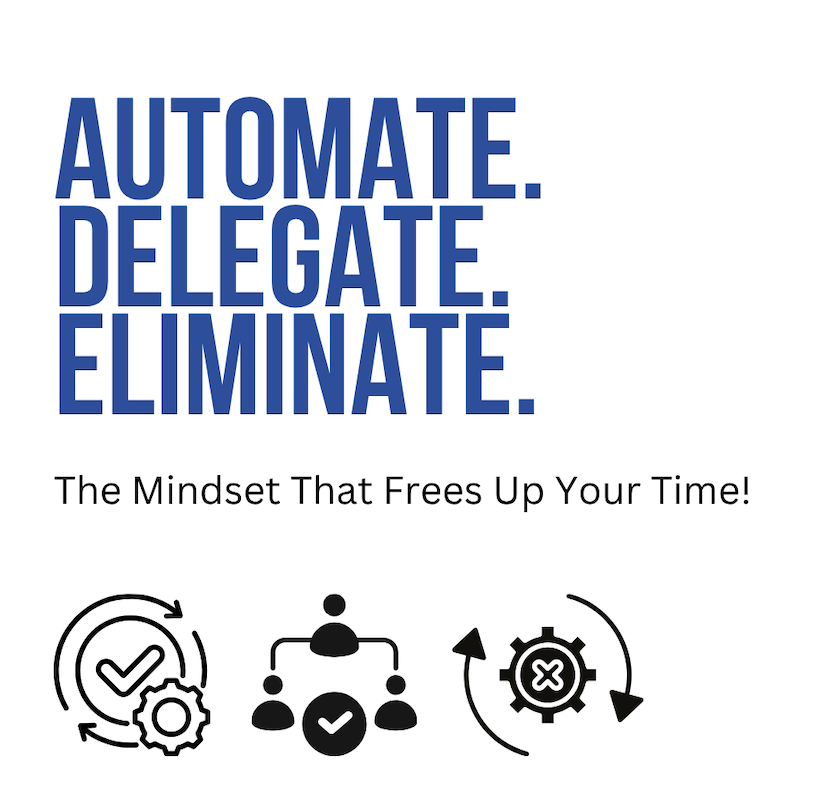
One simple operating principle shared in the session:
- Automate what you can
- Delegate what you shouldn’t be doing
- Eliminate what doesn’t add value
Freeing up your time allows you to focus on growing the business, not just staying busy inside it.
Your LinkedIn Profile Is a Business Asset
Your LinkedIn profile essentials are not just a social media presence. They are infrastructure for your business consulting practice. A well-optimized profile works for you around the clock, attracting the right people and building credibility with those who have never met you.
For LinkedIn for business growth to work, your profile must do three things instantly:
- Communicate who you help (not just your job title)
- Demonstrate the value you deliver (not just your experience)
- Make it easy to take the next step (a clear CTA and contact info)
Every potential client, referral partner, or event organizer will check your LinkedIn before they reach out. What they find either builds confidence or creates doubt.
From First Client to Consistent Clients
Getting your first client is a milestone. Getting consistent clients is a system. That distinction is where many people in business consulting get caught off guard.
Early on, most work comes from people who already know you: former colleagues, existing connections, referrals. That is not just normal, it is valuable. But over time, relying only on your existing network creates a natural ceiling. At some point, you have to shift from who knows you to how people find you.
The Reality (and the Reward) of Business Consulting
This is not a six-step plan to make millions by next week. Let us be honest about that.
Business consulting comes with uncertainty, learning curves, and uncomfortable moments. There will be full, productive periods where everything moves at once. And there will be quieter stretches that feel unsettling if you are used to the rhythm of a salary. Those quieter moments are not a sign something is wrong. They create space to refine your positioning and strengthen relationships.
What Business Consulting Actually Offers
The rewards are real, even if they are not linear:
- Freedom. The kind you cannot buy back once you have tasted it.
- Creative control. You choose the work, the clients, the direction.
- Global reach. Business consulting in 2026 means working with people anywhere in the world, made possible by platforms like LinkedIn.
- Compounding authority. Every post, every client win, every conversation builds on the last.
Progress in business consulting looks different from a traditional career. It is not promotions and salary bands. It is working with better-aligned clients, having greater control over your time, and choosing projects that genuinely interest you.
LinkedIn for business growth plays a role here too. As your authority builds on the platform, the quality of inbound opportunities improves. You stop chasing and start choosing. That is not just a business outcome. It is a quality-of-life outcome.
Realities in Consulting
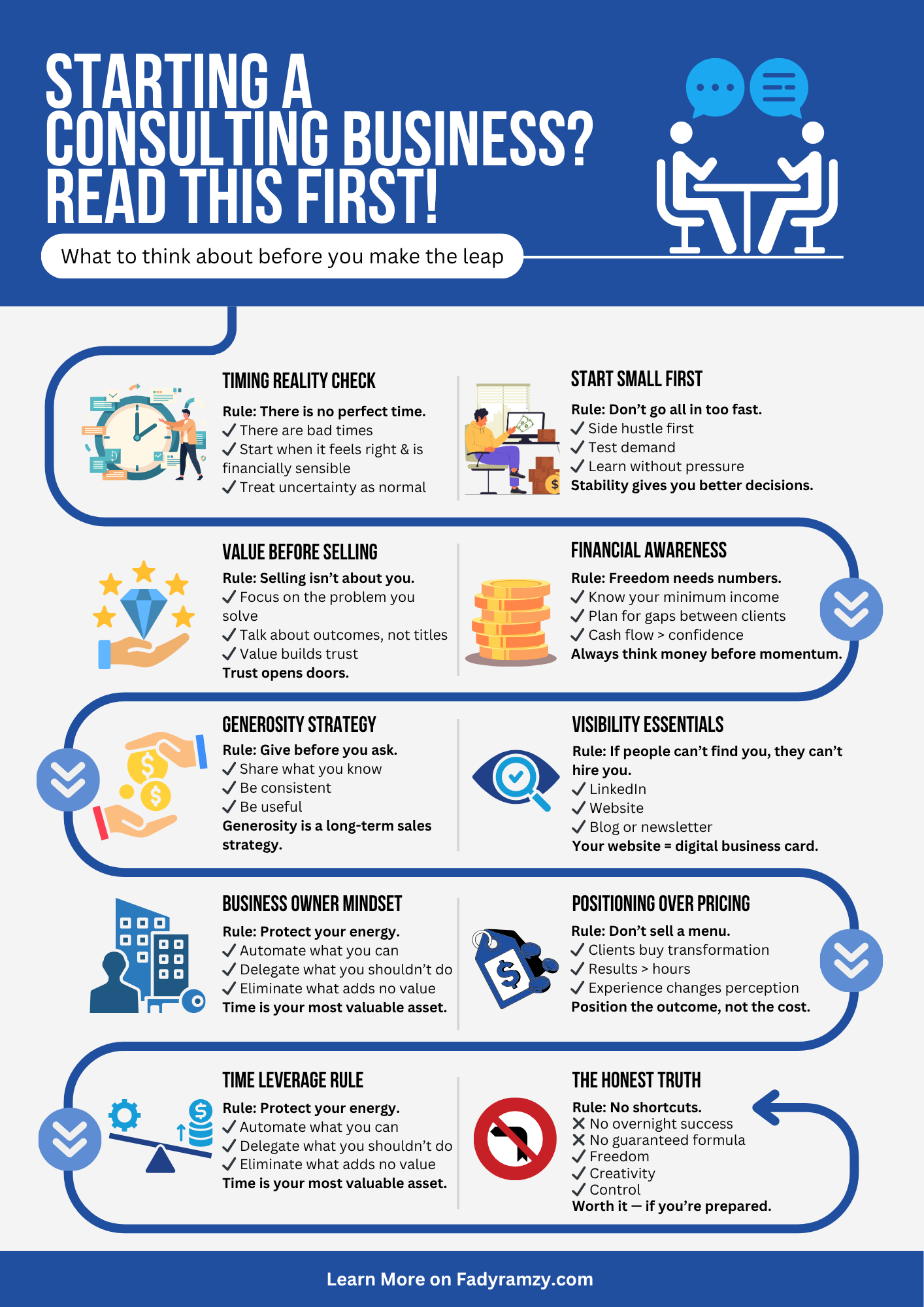
Another reality that often goes unspoken is the role uncertainty plays in consulting. Some periods will feel full and productive, where everything seems to be moving forward at once. Others may feel quieter, slower, or even uncertain. That contrast can be uncomfortable, especially if you’re used to the structure and predictability of a full-time role.
But those quieter moments are not necessarily a sign that something is wrong. More often than not, they’re just part of the rhythm.
They create space to reflect, refine your positioning, strengthen relationships, and improve how you operate. Over time, you begin to see that growth in consulting isn’t always linear. It moves in cycles. And learning how to navigate those cycles is part of building something sustainable.
 What is Consulting All About? Between Revenue, Progress & Going Beyond the “Invoice”
It’s also worth recognizing that consulting is not just about revenue. It’s about relationships. In fact, the two are deeply connected.
A single strong client relationship can lead to multiple opportunities. One meaningful collaboration can open doors you didn’t expect. And often, the most valuable outcomes come not from transactions, but from trust built over time. That’s why the way you work matters just as much as the results you deliver. People remember how you made them feel during the process. Whether you were responsive. Whether you listened. Whether you genuinely cared about the outcome.
Those things don’t always show up on a proposal or invoice, but they are often what drive repeat work and referrals.
As you spend more time in consulting, something else begins to shift: how you define progress.
In traditional roles, progress is usually clear. It’s tied to promotions, salary increases, or new titles. There’s a visible path, and you can measure where you are along it.
In consulting, it’s less obvious.
Progress might look like working with better-aligned clients rather than more clients. It might mean having greater control over your time, or choosing projects that genuinely interest you. Sometimes, it’s simply feeling more aligned with how you want to work and live.
That shift can take time to recognize. But once you do, it changes how you evaluate success.
Starting a Consulting Business is Rarely a Single Decision.
Starting a business consulting practice is rarely a single decision. It is a series of smaller ones made over time: choosing to test an idea, taking on a project, sharing your thinking publicly.
You do not need to have everything figured out to begin. You just need to start paying attention to where you can create value, and be willing to act on it.
Because LinkedIn for business growth is the thread that connects all of it. It is where you show your thinking before you have a polished offer. It is where your reputation compounds quietly, post by post, until one day someone reaches out and says: “I have been following your work for a while. I think you can help us.”
That moment does not happen by accident. It happens because you showed up.
Ready to build a business consulting practice that grows through LinkedIn? The LinkedIn Influence Accelerator covers positioning, profile optimization, content strategy, and lead conversion. If you are serious about making LinkedIn work for your consulting business, this is where to start.
Frequently Asked Questions: Business Consulting and LinkedIn
How do I start a business consulting practice with no clients?
Start with your existing network. Reach out to former colleagues and managers, offer a pilot project, and ask for referrals. In parallel, optimize your LinkedIn profile and begin posting consistently. Most early business consulting work comes from warm connections, not cold outreach.
How do I use LinkedIn for business growth as a new consultant?
Optimize your profile first, then post 2 to 3 times per week with insights, frameworks, and honest reflections from your work. Engage meaningfully in comments. Consistency over 60 to 90 days builds the authority that generates inbound inquiries.
What kind of content works best for business consulting on LinkedIn?
Content that demonstrates your thinking outperforms content that describes your services. Case studies, lessons learned, and industry analysis all perform well. The key is specificity: write for a specific audience about a specific problem.
How long before LinkedIn for business growth produces results?
Most consultants see meaningful engagement within 60 to 90 days. Inbound inquiries typically follow after 3 to 6 months of sustained, focused effort. Clear positioning accelerates the timeline significantly.
Do I need a large following for LinkedIn to work for business consulting?
No. One hundred engaged connections in your exact niche outperform ten thousand passive followers. Focus on relevance and depth of connection, not follower count.
Should I optimize my LinkedIn profile before I start posting?
Yes. Your profile is the destination for everyone who sees your content. A vague or incomplete profile loses the opportunity even when the content is strong. Get the LinkedIn profile essentials right before you invest in content.
Can I run a business consulting practice without LinkedIn Premium?
Yes. Many consultants build their entire client base through organic LinkedIn activity alone. Premium tools can help with outreach, but they are not required to generate consistent consulting work.
How does the LinkedIn algorithm affect business consulting visibility?
The LinkedIn 360Brew algorithm rewards clarity and consistency over frequency. Unclear positioning actively reduces your reach. Align your profile, content themes, and audience around one clear niche and the algorithm works with you.