How To Elevate Your Executive Brand in 5 Transformative Steps for Board Positions
Building A LinkedIn Profile for Board Positions
Most executive LinkedIn profiles share the same flaw: they are impressive on paper but forgettable in practice.
They are packed with titles, promotions, and long lists of responsibilities. They document a career. What they fail to do is position a leader for the next stage of that career, specifically, for a seat in the boardroom.
A LinkedIn profile for board positions should communicate more than an executive’s career history. A board-ready LinkedIn profile positions a leader by showing how their experience, strategic perspective, and expertise can contribute to a boardroom, with a focus on governance and strategic oversight. It shifts the profile from documenting what a leader has done to communicating why they are suited for board-level opportunities.
During a workshop with Women for Boards GCC Founder Katja Reiger, a room full of senior executives spent an afternoon doing something most of them had never done before: looking at their own LinkedIn profiles as if they were a board search consultant who had never heard of them. Profile after profile told the story of what someone had done. None of them communicated why that person belonged in a boardroom.
That gap, between a career record and a board-ready positioning tool, is wider than most executives realize. And it costs real opportunities.
If your goal is to build a LinkedIn profile for board positions, the standard executive profile will not get you there.
The core insight: A LinkedIn profile is no longer just a professional record. It is a positioning tool. It is how decision-makers evaluate how you think, what you stand for, and whether you bring the kind of perspective that belongs at a board table.
This guide walks you through five practical steps to transform your executive LinkedIn profile into a board-ready LinkedIn profile that signals authority, communicates governance expertise, and attracts the right opportunities.
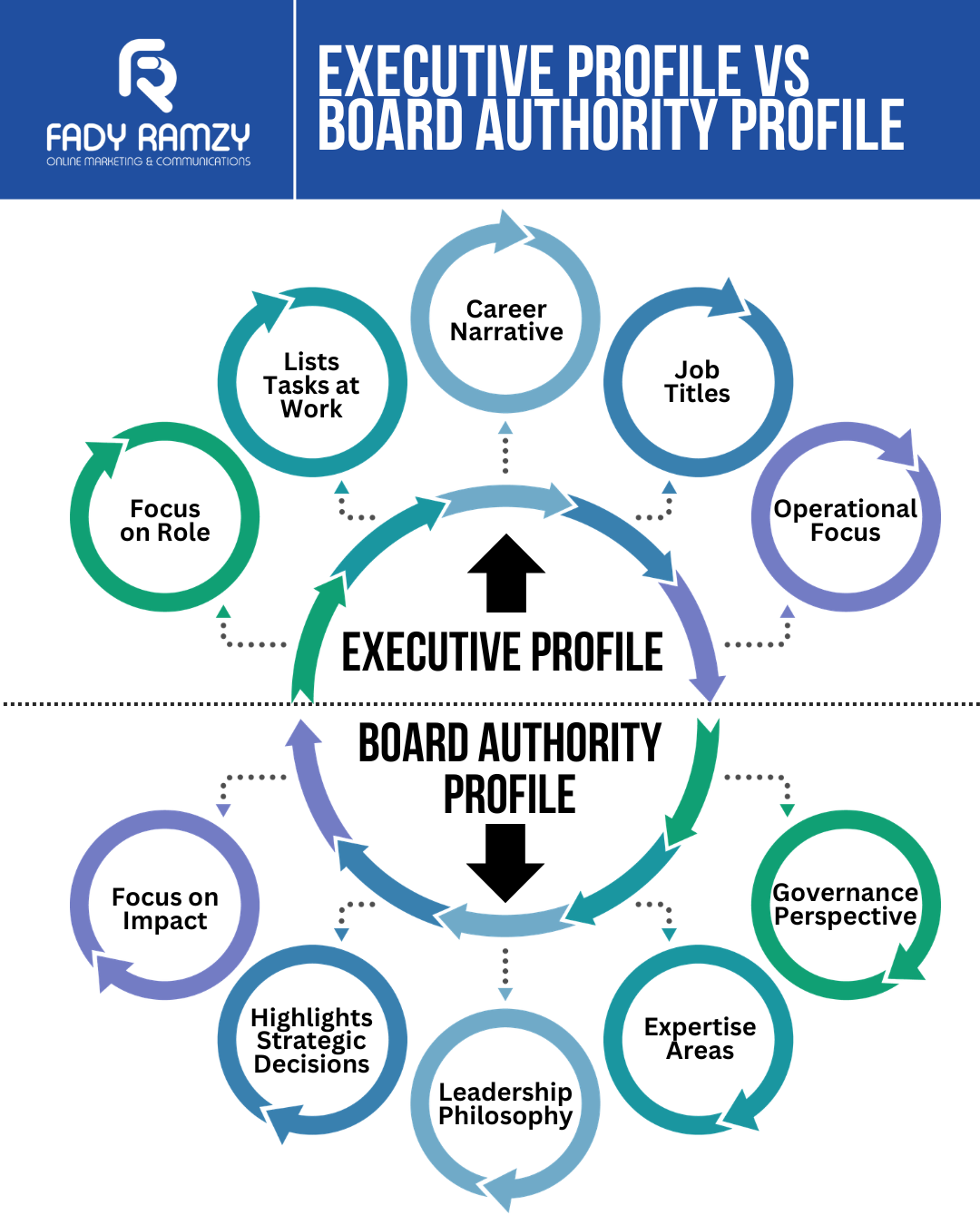
It’s how people evaluate how you think, what you stand for, and whether you bring the kind of perspective that belongs in a boardroom… And that’s the exact difference between an Executive Profile and a Board Authority Profile.

Start with the Right Mindset: What Board Competencies Do You Bring?
Before you change a single word on your profile, the mindset shift has to happen first.
Most executives approach LinkedIn by asking: How do I summarize my experience? That question is fine for documentation. But if your goal is to position yourself for board opportunities, the better question is:
What are the top three board competencies I bring to the table?
This is not about your title or your function. It is about the perspective you carry into strategic conversations. Consider:
- Do you guide organizations through periods of transformation and uncertainty?
- Are you the person leadership teams turn to when navigating risk, governance challenges, or market expansion?
- Do you bring financial oversight, regulatory expertise, or cross-sector strategic judgment?
A practical way to uncover your answer: pay attention to what people consistently ask your advice on. That pattern reveals the expertise others already see in you, even if you have not yet articulated it clearly on your profile.
This is your starting point. Everything else on your board-ready LinkedIn profile, from your headline to your About section, should flow from this clarity.
Board readiness is ultimately about demonstrating the knowledge, competencies, and judgment needed to contribute effectively at the board level. The National Association of Corporate Directors (NACD) frames director effectiveness around core board responsibilities and the knowledge and competencies directors need to perform them.
Step 1: Your Profile Photo and Banner Set the First Impression
Before someone reads a single word on your profile, they have already formed an impression. Two visual elements drive that first judgment: your photo and your banner.
Your Profile Photo
A strong headshot for a LinkedIn profile for board positions should feel professional, clear, and confident. Not overly staged, but intentional. Not overly casual, but approachable.
When someone lands on your profile, they should immediately sense they are looking at someone who makes decisions, not someone who executes them. That distinction is communicated visually before any text is read.
Your Banner: Prime Real Estate, Not an Afterthought
Many executives leave the banner blank or fill it with a generic corporate image. This is a missed opportunity. Your banner is the first strategic statement on your profile, and it should work hard.
The most effective banners answer three questions quickly and clearly:
| Question | What It Communicates |
|---|---|
| What problem do you help solve? | Your area of expertise |
| Who do you help? | Your target audience or stakeholder |
| Why does your expertise matter? | The outcome or value you deliver |
Basically, when someone lands on your profile, they should immediately feel they’re looking at someone who makes decisions, not just someone who executes them.
Read more on the Triangle of First Impressions.
Step 2: Your Headline Should Signal Board-Level Thinking
This is one of the most common mistakes executives make: using a job title as a headline.
“CEO at Company X” or “CFO at Company Y” may be accurate. But it says nothing about the perspective you bring as a leader or the kind of conversations you belong in.
For a LinkedIn profile for board positions, your headline should answer a more meaningful question: How do you see yourself professionally, and what strategic value do you bring?
The Difference in Practice
Compare these two approaches:
Less effective:
Chief Operating Officer at XYZ Company
Board-ready:
Chief Operating Officer | Strategy | Governance | Business Transformation | Board Advisor
The second version does three things simultaneously. It confirms your current role, signals your board ambition, and tells visitors exactly where your expertise sits. It also improves your discoverability in LinkedIn searches, since board-related keywords help algorithms surface your profile to the right people.
Think about the role you play in helping organizations move forward. Perhaps you guide companies through transformation. Perhaps your expertise lies in governance, risk management, or market expansion. Your headline should capture that narrative by hinting at the kind of conversations you are already part of.
A simple framework is:
Current role | Strategic expertise | Board-relevant expertise | Board positioning
Use only areas that genuinely reflect your experience. Do not add board titles, governance expertise, or achievements that you cannot support.
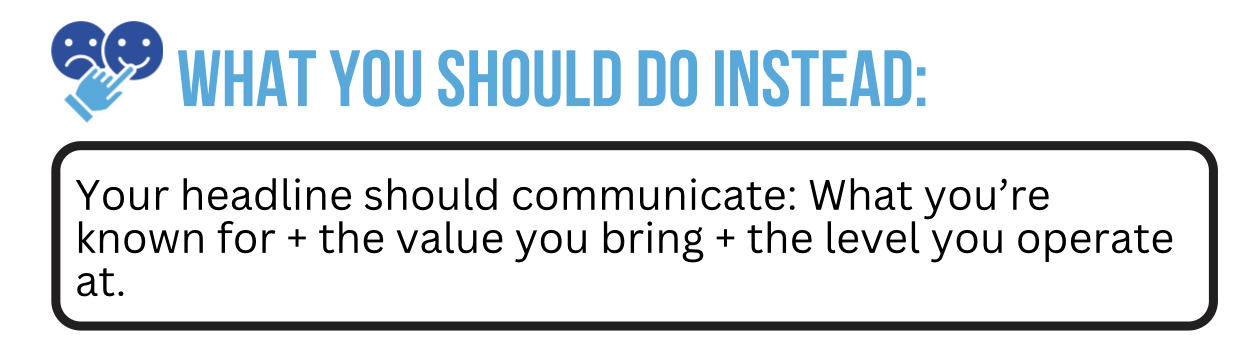
For a deeper framework on building the full picture of your executive presence on LinkedIn, the board-ready LinkedIn profile guide covers the complete five-step visibility strategy, including how to align your profile with the industries and conversations where you want to be recognized.
LinkedIn itself notes that the professional headline appears in search results and can be used to highlight an area of expertise. This makes the headline especially important when positioning yourself for board opportunities.
Step 3: Your About Section Is Your Leadership Story
Most About sections read like compressed résumés: a list of accomplishments, a few numbers, and a brief career summary. That approach works for job seekers. It does not work for board candidates.
The About section on a LinkedIn profile for board positions is an opportunity to explain how you think, how you lead, and what perspective you bring to strategic conversations.
Ask yourself these questions as you write it:
- What kinds of challenges genuinely excite you?
- What problems do you naturally gravitate toward solving?
- What perspective do you bring to strategic leadership conversations that others do not?
Then connect those answers to your actual leadership, governance, transformation, or strategic experience.
The real test: If someone reads your About section and cannot tell whether you are a board-level thinker or a mid-level manager, it needs to be rewritten.
From Résumé Summary to Leadership Narrative
Here is what the shift looks like in practice:
Résumé-style (less effective):“Responsible for managing regional operations across five countries.”
Leadership narrative (board-ready):“Over the past decade, I have led business transformation across five markets, helping organizations strengthen governance, build high-performing leadership teams, and navigate periods of rapid growth.”
The second version communicates judgment, perspective, and strategic impact. It tells a reader not just what you did, but how you led, and why it mattered.
The workshop surfaced a pattern worth naming directly: many executives had not updated their About section in years. Not because nothing had changed, but because they assumed their experience spoke for itself. The people reading your profile are not inside your head. They need you to connect the dots for them.
If you are positioning yourself for board roles, your About section needs to showcase your governance thinking, your ability to guide organizations through uncertainty, and the kind of strategic counsel you bring to the table. That is what board search committees and nominating committees are actually looking for.
Your LinkedIn profile is not a static document. It is a living narrative that should evolve as your leadership identity sharpens.

How to Demonstrate Board Readiness Before Your First Board Role
In every workshop I run, someone asks: “I don’t have a board title yet. Does that disqualify me?” It doesn’t. The advisory roles, the committee work, the nonprofit leadership you’ve accumulated, that’s board-relevant experience. It just hasn’t been translated yet. The Executive Personal Brand Audit puts it well: most executives have strong credentials but invisible thinking. For board positioning, showing how you think is what gets you considered.
The fix is simple: describe your work more completely. If you served on a nonprofit board, say what you did. If you completed governance training, name the institution. Don’t call yourself a “board member” if your role was advisory. But don’t leave unpaid roles off either. Those often carry the clearest governance signals. Your board-ready LinkedIn profile is where this translation happens across your headline, About section, and Experience entries.
Board seats are rarely filled through applications. They go to people who were already visible and trusted before the role existed. Your profile needs to communicate readiness now. As Professional Clarity in Times of Uncertainty argues, you don’t need a perfect story to start. You need enough direction to move.
Step 4: Your Experience Section Should Show Impact, Not Just Activity
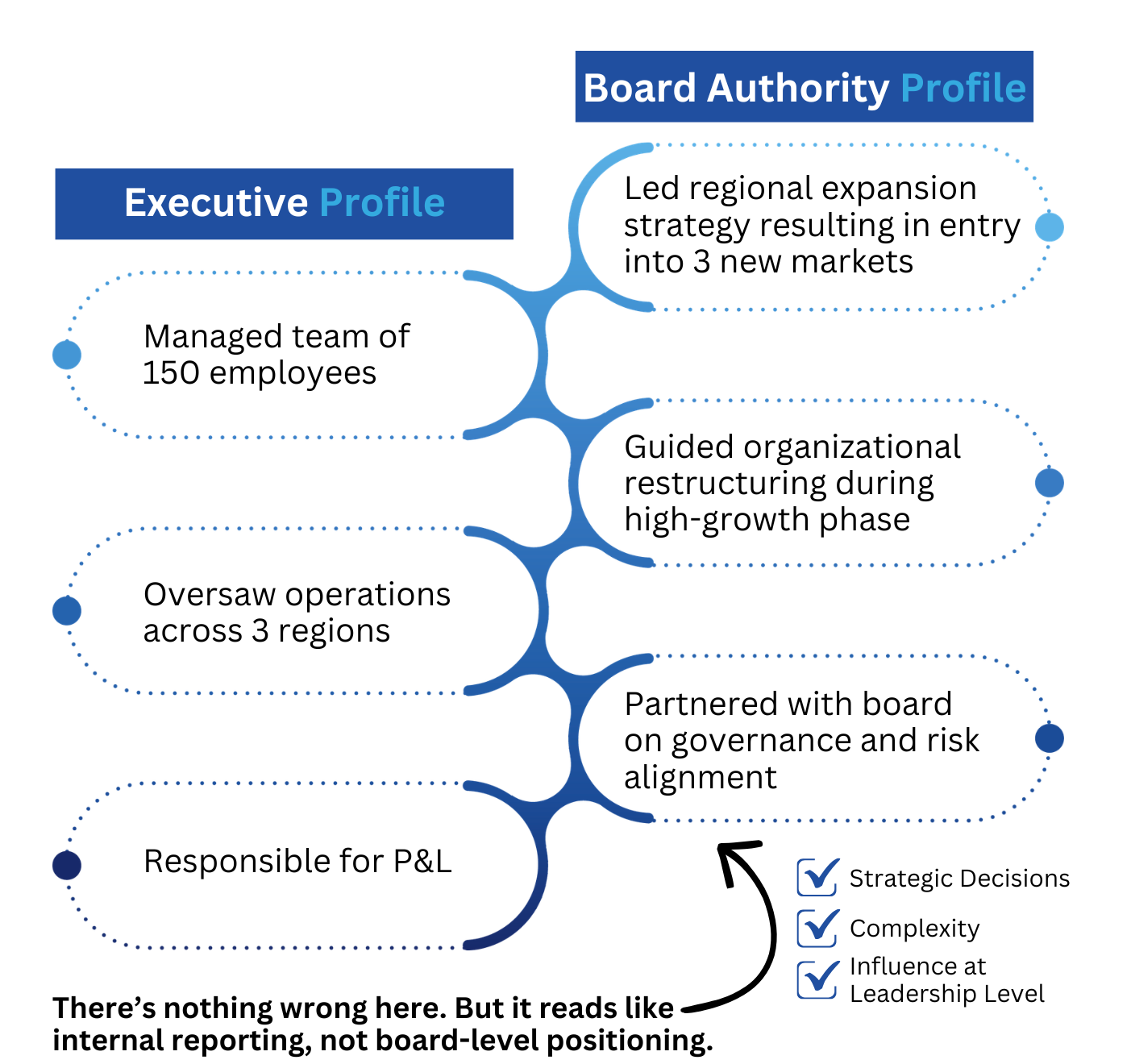
There are two common extremes in executive experience sections. One is so brief it feels vague. The other is so detailed it reads like an internal job description. Neither works for a LinkedIn profile for board positions.
What you are aiming for is balance: strategic depth without operational clutter.
What to Highlight in Each Role
Focus on the decisions that shaped outcomes, not the tasks you managed. For each significant role, ask:
- What strategic initiative did I lead, and what was the result?
- What transformation did I drive, and how did it affect the organization?
- What board-relevant skills, such as governance, risk oversight, or financial stewardship, did I exercise?
The goal is to show how you contribute to the bigger picture, not to document your responsibilities in a listicle format.
Add Strategic Volunteer Roles
One of the most overlooked sections on executive profiles is volunteer experience. If you serve on nonprofit boards, advisory councils, or industry committees, include them. These roles demonstrate something important: you are already operating in environments that require governance, accountability, and strategic perspective.
They also give visitors a fuller picture of your values and the kinds of communities you support, which matters to boards that care about culture fit as much as credentials.
Board competencies to make explicit in your Experience section: governance oversight, risk management, financial stewardship, strategic transformation, audit committee experience, stakeholder accountability, and cross-sector leadership.
The experience section of a board candidate LinkedIn profile should read like a record of strategic contribution, not a job description archive.
Step 5: Visibility Is the Bridge Between Your Profile and Board Opportunities
A polished profile is necessary. It is not sufficient.
Board opportunities are rarely filled through a cold application. They are built through relationships, reputation, and visibility that accumulates long before a position becomes available. If the right people cannot find you, understand your expertise, or see how you think, they will not think of you when an opportunity surfaces.
How LinkedIn Activity Builds Board Credibility
Consistent engagement on LinkedIn, through posts, comments, and shared insights, does three things for a board candidate:
- Demonstrates thought leadership. Sharing your perspective on governance, strategy, or industry trends shows decision-makers how you think, not just what you have done.
- Builds familiarity. People recommend those they know. Regular visibility means your name comes up in conversations before you ever ask for anything.
- Signals board-level judgment. The topics you engage with, and the way you engage with them, communicate what kind of board member you would be.
The Fear That Keeps Executives Invisible
Many senior leaders hold back from posting because they worry about saying the wrong thing, looking self-promotional, or simply not knowing where to start. That hesitation is understandable, but it is also costly.
One participant in a workshop captured it plainly: “Extreme caution might just make us invisible.” She was right. The people who matter, the board search consultants, the nominating committee members, the well-connected peers, are often watching silently. They will not tell you they noticed. They will just remember your name when it counts.
The perfectionism trap is real too. Several participants admitted they had drafted posts, sat on them for days, and eventually deleted them without publishing. The bar they had set for themselves was so high that nothing ever felt ready. But the executives who show up consistently, even imperfectly, are the ones who stay visible. And visibility is what converts expertise into opportunity.
The goal is not to post everything. It is to post thoughtfully, consistently, and in a way that reflects the kind of judgment you would bring to a board table. If you are navigating that reluctance, the guide on conquering the fear of posting addresses exactly this challenge, with practical ways to build a visible presence that feels authentic rather than performative.
Visibility is not optional for board candidates. Your expertise cannot create opportunities if nobody knows it exists.
Let’s Recap…Your Profile Is Your Narrative
Take the Next Step: Know Where You Stand
Reading about board visibility is one thing. Knowing exactly where your profile stands is another.
Most executives discover their biggest gaps not through advice, but through a clear, honest audit of what decision-makers actually see when they search for them. That is where the Executive Visibility Assessment comes in.
In under five minutes, you will get a personalized score across the areas that matter most to board search committees: your positioning, your profile strength, your thought leadership presence, and your overall discoverability.
No guesswork. No generic feedback. Just a clear picture of where you are and what to fix first.
Take the Executive Visibility Assessment now and find out whether your LinkedIn profile is working for you or quietly costing you opportunities.
Frequently Asked Questions
Q1: What makes a LinkedIn profile for board positions board-ready?
A LinkedIn profile for board positions should communicate governance expertise, strategic judgment, and the value you bring to a boardroom.
Q2: Should I mention board roles in my LinkedIn headline?
Yes, when relevant to your experience and goals. A board-ready LinkedIn profile should use accurate terms such as board advisor, governance, or strategic leadership.
Q3: How do I write an About section for board positions?
Focus on your leadership perspective, strategic strengths, and the problems you solve. A board-ready LinkedIn profile should explain how you think, not simply list your career history.
Q4: What should I include in my Experience section?
Highlight board and advisory roles, leadership achievements, governance responsibilities, and strategic outcomes. These details strengthen your LinkedIn profile for board positions.
Q5: Does LinkedIn activity improve board visibility?
Yes. Sharing insights and engaging in relevant conversations can demonstrate your expertise and strengthen a board-ready LinkedIn profile.
Q6: Can I create a board-ready profile without board experience?
Yes. Relevant executive, advisory, nonprofit, or committee experience can strengthen a LinkedIn profile for board positions when you clearly connect it to your strategic and governance skills.
Q7: How can I check my board visibility on LinkedIn?
Search for yourself as a board recruiter would. A strong LinkedIn profile for board positions should clearly communicate your governance expertise, strategic leadership, and board-relevant value.
Q8: How often should I update my board-ready LinkedIn profile?
Review it at least quarterly. Update your headline, About section, experience, and new board or advisory roles as your leadership profile evolves.