How Corporate Influence Works When Advertising Doesn’t: The 6 Hidden Strategies Shaping Public Perception
When traditional advertising loses its power, corporations turn to subtle yet powerful influence strategies. Here is how companies shape public opinion and buying decisions without a single ad.
In a world where consumers are increasingly sceptical of traditional advertising, brands are finding that corporate influence does not just come from flashy campaigns. It comes from the ability to shape conversations, values, and decisions in more subtle and enduring ways.
This was the central message from a recent LinkedIn Live session with Svenja Maltzahn on “How Corporate Influence Works When Advertising Doesn’t.” Rewatch.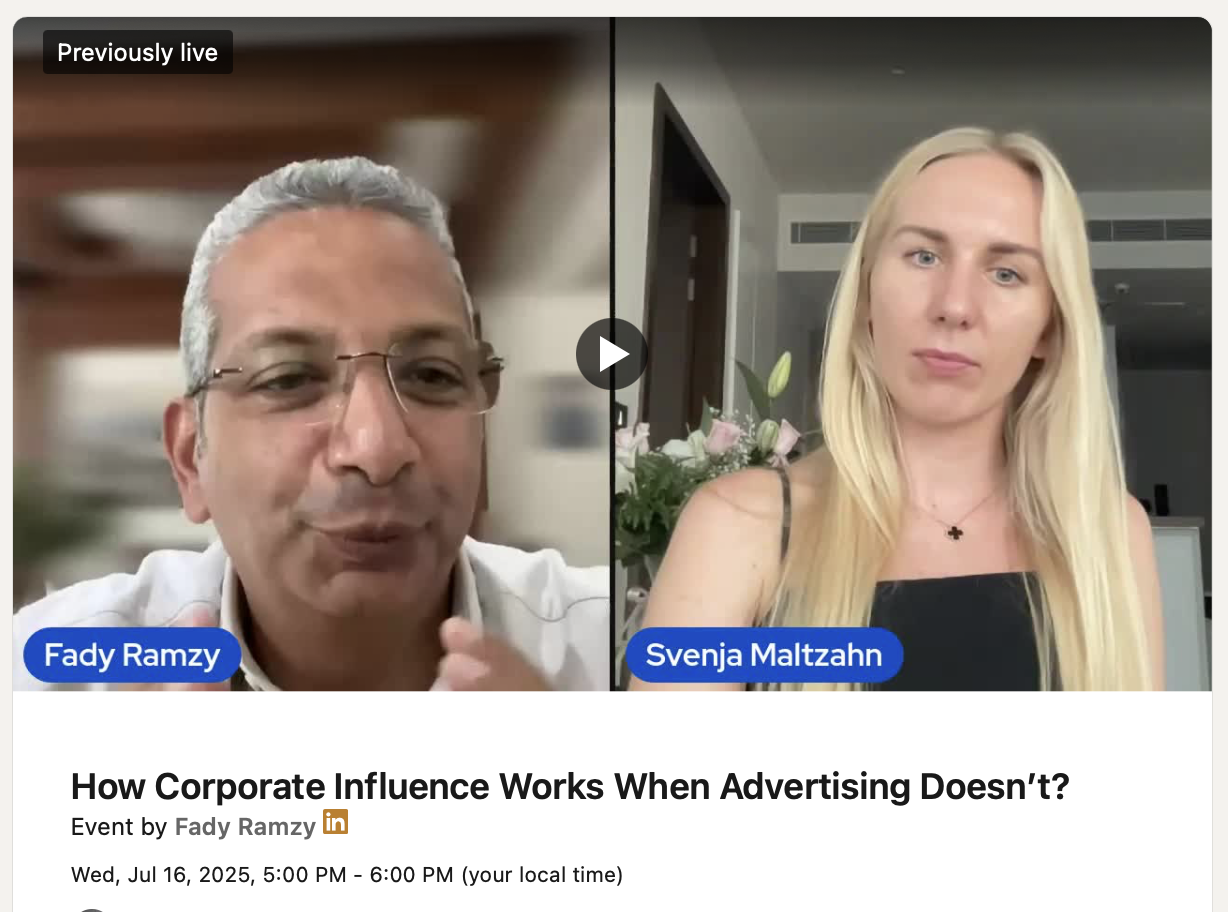
1. The End of Traditional Advertising?
In today’s digital-first world, the power of traditional advertising is fading. Audiences are tired of intrusive ads, skeptical of polished marketing campaigns, and more likely to block, skip, or ignore brand messages. But this doesn’t mean corporations have stopped trying to influence public opinion. Instead, they’ve evolved.
The modern game is subtle, weaving influence into everyday culture, media narratives, and even policy debates. This shift raises an important question: When advertising doesn’t work, how else do corporations influence us?
2. From Selling Products to Shaping Agendas
Corporate influence today often extends far beyond selling a product. Companies invest in shaping public narratives, setting the terms of debate, and influencing cultural norms.
Instead of just pushing ads for a new soda or tech gadget, brands might:
- Sponsor industry research to frame certain issues in their favor.
- Support nonprofits or think tanks that promote aligned agendas.
- Fund educational programs to shape how topics are taught and understood.
This is not accidental. It’s strategic. By influencing the context in which we think, corporations can shape demand before a purchase decision even exists.
3. Leveraging Media Without Buying Ad Space
When advertising fails, companies can still dominate media narratives through:
- Press coverage: By crafting compelling press releases or “newsworthy” studies, brands secure free exposure in news outlets.
- Native content: Articles, interviews, and op-eds published in credible outlets that appear editorial but subtly push corporate talking points.
- Influencer partnerships: Social media personalities often have higher trust levels than corporate ads, making them ideal messengers for brand-aligned narratives.
This method blends into everyday content, making it less detectable as advertising, and more persuasive.
4. Building Trust Through Third Parties
A powerful tactic in corporate influence is letting others speak for you.
Corporations often work through:
- Industry associations that advocate for policies favorable to their members.
- Academic experts who publish studies reinforcing corporate positions.
- Grassroots organizations (sometimes funded by the corporation itself) that rally public support.
When the message comes from a trusted third party, skepticism fades, and the influence feels organic.
5. Influencing Policy and Regulation
Sometimes, corporate influence skips the consumer entirely and focuses on shaping the rules of the game.
- Lobbying for favorable regulations
- Funding political campaigns
- Participating in policy advisory boards
- Pushing legislation that indirectly boosts market share
By securing the right legal and economic environment, corporations can ensure long-term success, regardless of whether traditional ads work.
6. Controlling the Conversation Through Framing
One of the most overlooked aspects of influence is framing which is deciding how an issue is discussed.
Example: Instead of framing a debate around “environmental harm from plastics,” a corporation might push “plastics as an innovation in food safety.” The facts remain the same, but the angle changes public perception.
Framing works because it guides people toward specific interpretations without them realizing they’ve been guided.
7. Emotional Branding Without Ads
Even without direct advertising, brands invest in emotional connections:
- Sponsoring major cultural events (sports, music, festivals)
- Associating with social causes (sustainability, equality, education)
- Creating branded content that entertains rather than sells
These emotional links can be just as persuasive as a traditional ad, sometimes more so, because they feel authentic.
Why This Matters for Consumers
The move away from obvious advertising means influence is now harder to spot. Corporate narratives often feel like organic public discourse, but they’re not always neutral.
For consumers, this means:
- Questioning where information comes from
- Looking for potential conflicts of interest in news, research, and activism
- Recognizing when “grassroots” campaigns may have hidden backers
Awareness is the first step toward informed decision-making.
The Influence You Don’t See
When traditional advertising no longer delivers, corporations adapt, and often in ways that are invisible to the public. From shaping the cultural conversation to influencing policy, these tactics are more sophisticated than any 30-second TV spot.
The next time you read a “neutral” news article, see a popular influencer promote a cause, or encounter a public awareness campaign, ask yourself: Who benefits from this narrative?
Because in the world of corporate influence, the most powerful campaigns are the ones you don’t even recognize as marketing.
What You Can Do About It
Understanding corporate influence does not mean becoming cynical about everything you read or hear. It means becoming a more discerning consumer of information. Ask who funded the study. Look for the conflict of interest in the op-ed. Notice which causes a brand suddenly champions when it is under regulatory pressure.
For professionals and business leaders, there is also a positive takeaway here: the same principles that corporations use to shape perception can be used ethically to build genuine authority. Sharing real expertise, building trust through consistency, and letting your results speak louder than your ads – that is influence done right.
Let’s Recap…A Quick FAQ
What is corporate influence? Corporate influence refers to the ways companies shape public opinion, consumer behaviour, and policy decisions beyond traditional advertising. This includes media relations, sponsored research, influencer partnerships, lobbying, and emotional branding – all designed to shift how people think and act without them necessarily recognising it as marketing.
How do corporations influence public opinion without advertising? Corporations influence public opinion through several subtle strategies: placing stories in credible news outlets, funding think tanks and academic research that supports their positions, partnering with influencers who have high audience trust, sponsoring cultural events to build emotional associations, and lobbying governments to shape the regulatory environment in their favour.
What is framing in corporate influence? Framing is the practice of controlling how an issue is discussed rather than what is said about it. By choosing specific language and angles, corporations can guide public interpretation of a topic. For example, reframing an environmental debate from “plastic pollution” to “plastic as food safety innovation” changes the emotional and logical response without changing the underlying facts.
How can consumers protect themselves from corporate influence? Consumers can protect themselves by questioning the source of information, looking for potential conflicts of interest in research and journalism, and recognising when “grassroots” campaigns may have corporate backing. Media literacy – the ability to critically evaluate where information comes from and who benefits from it – is the most effective defence.
Is corporate influence always unethical? Not necessarily. Many corporate influence strategies – such as sponsoring cultural events, building emotional brand connections, or advocating for industry policies – are legal and widely accepted. The ethical line is crossed when influence is deliberately disguised as independent opinion, or when it is used to mislead consumers or manipulate public policy against the public interest.
If you want to build influence the right way – through genuine expertise and consistent visibility – explore how I help professionals do exactly that through the LinkedIn Influence Accelerator.