What Is the Best Way to Use LinkedIn for Business Growth? A 9-Step Practical Guide
Use LinkedIn for Business Growth
Let me ask you something honest.
When you first started taking LinkedIn for business growth seriously, did you have any idea what you were doing? You were probably posting occasionally, connecting with people you barely knew, and wondering why nothing was moving. No leads. No opportunities. No traction.
I sat down with Marina Panova for a LinkedIn Live event, and something clicked. We went deep on what actually moves the needle on this platform : the profile decisions most people get wrong, the content habits that build real trust, and the lead generation approaches that convert without feeling like a pitch.
LinkedIn is the single most powerful professional platform on the planet for business growth. Over one billion members. Decision-makers in every industry. And most of them are reachable, if you know how to show up.
The question is never “should I use LinkedIn for business growth?” The question is always “am I using it the right way?”
Here is what the right way looks like.
What you are reading now is a summary of the LinkedIn Live Event with Marina Panova and myself. The summary is structured into nine strategies you can put to work immediately.
How to Use LinkedIn for Business Growth: 9 Key Strategies
1. Profile Optimisation: Turn Your LinkedIn Into a 24/7 Lead-Generating Asset
Your profile is not a resume. It is a landing page. And if it reads like a job application, you are already losing business.
The first thing anyone does when they come across your content, your comment, or your name is click on your profile. That moment is your window. You have about three seconds to answer the question every visitor is silently asking: “Is this person relevant to me?”
Here is what a profile built for LinkedIn for business growth actually needs:
-
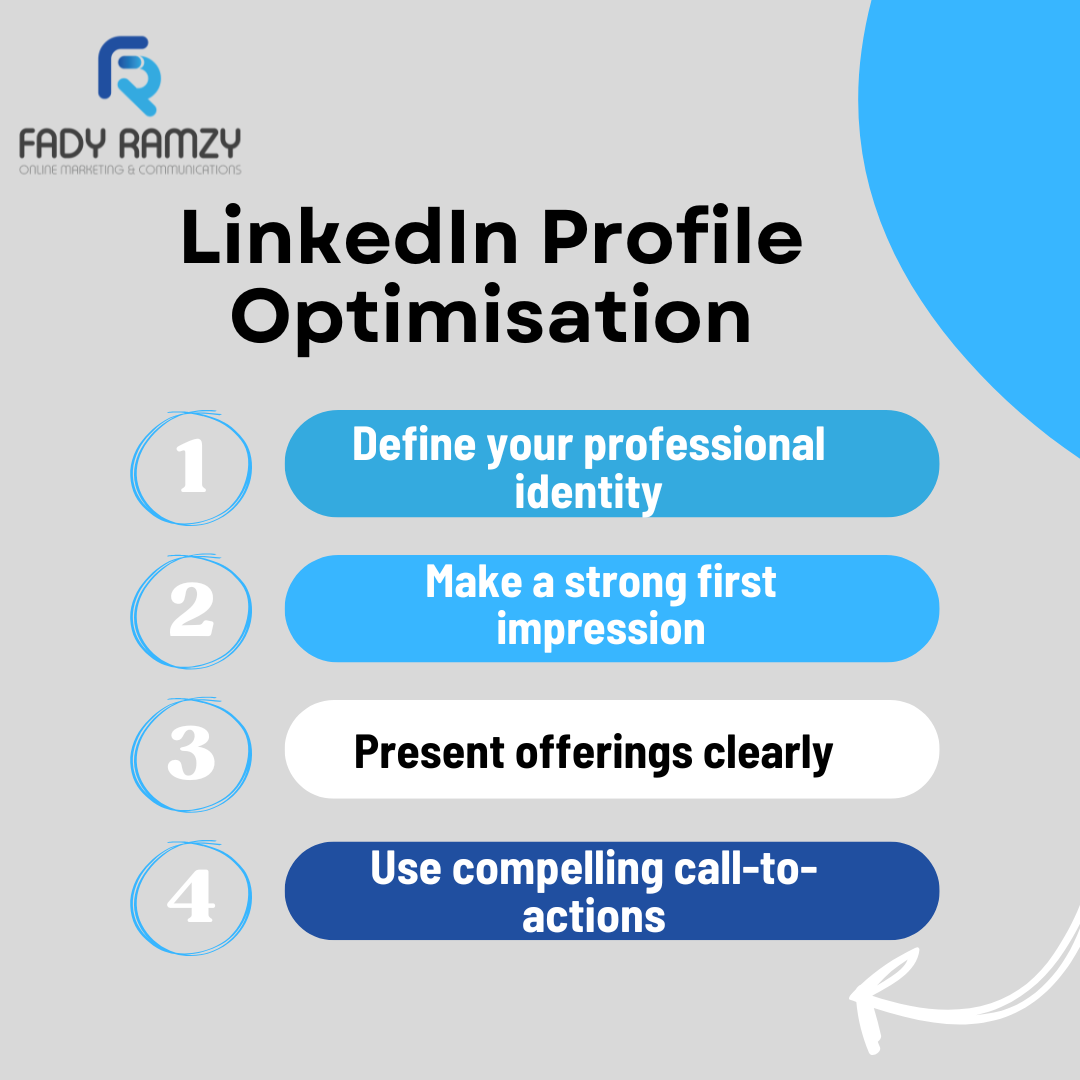
LinkedIn Profile Optimisation Strategy A headline that speaks to your audience, not your job title. Instead of “Marketing Director at XYZ,” try “I help B2B founders turn LinkedIn visibility into qualified pipeline.”
- A banner that communicates your positioning at a glance. Think of it as a billboard. What do you want people to remember?
- An About section written in first person, with a clear value statement in the first two lines. Most people bury the good stuff. Lead with it.
- A clear call to action. Where should someone go after reading your profile? A link, a booking page, a newsletter. Make it easy.
The profile is the foundation. Without it, even the best content strategy has nowhere to convert.
If you want a step-by-step breakdown of exactly what to include, I put together a detailed guide on LinkedIn profile essentials that make a strong first impression. Start there before you do anything else.
Why Most Profiles Fail to Convert
The biggest mistake I see is profiles that are written for the person, not for the reader. They list accomplishments without connecting them to outcomes the reader cares about. They use industry jargon that creates distance instead of connection. And they end with no direction whatsoever.
Fix those three things and your profile becomes a quiet, always-on asset working for your LinkedIn for business growth goals around the clock.
2. Content Strategy: How to Build Trust and Attract Your Ideal Clients
Content is the engine of LinkedIn for business growth. But not just any content. The kind that makes your ideal client stop scrolling and think, “This person gets it.”
There are three content types that consistently work:
| Content Type | What It Does | Example |
|---|---|---|
| Educational posts | Builds credibility and trust | A framework, a lesson, a how-to |
| Personal stories | Creates human connection | A failure, a turning point, a lesson learned |
| Social proof | Demonstrates real-world value | A client win, a testimonial, a case study |
You do not need to pick one and stick to it. The best content strategies rotate across all three, keeping your audience informed, connected, and convinced.
You can win the game by posting videos, text posts, or pictures. It really depends on your authenticity and expertise. People will believe in you and trust your expertise when they see you are genuinely good at what you do.
The Tools That Make Consistent Content Possible
One of the most common reasons people give up on LinkedIn is the time it takes to create content consistently. The good news is that the right tools cut that time dramatically. I have tested and reviewed the five best tools to boost your content creation process so you do not have to start from scratch.
Posting Frequency: Quality Over Volume
Two to three strong posts per week will outperform daily mediocre content every single time. The algorithm rewards engagement, not volume. A post that generates twenty meaningful comments will reach more people than five posts that generate silence.
Focus on depth over frequency. That is where LinkedIn for business growth through content actually happens.
3. Engagement: Why Consistent Activity Amplifies Your Visibility
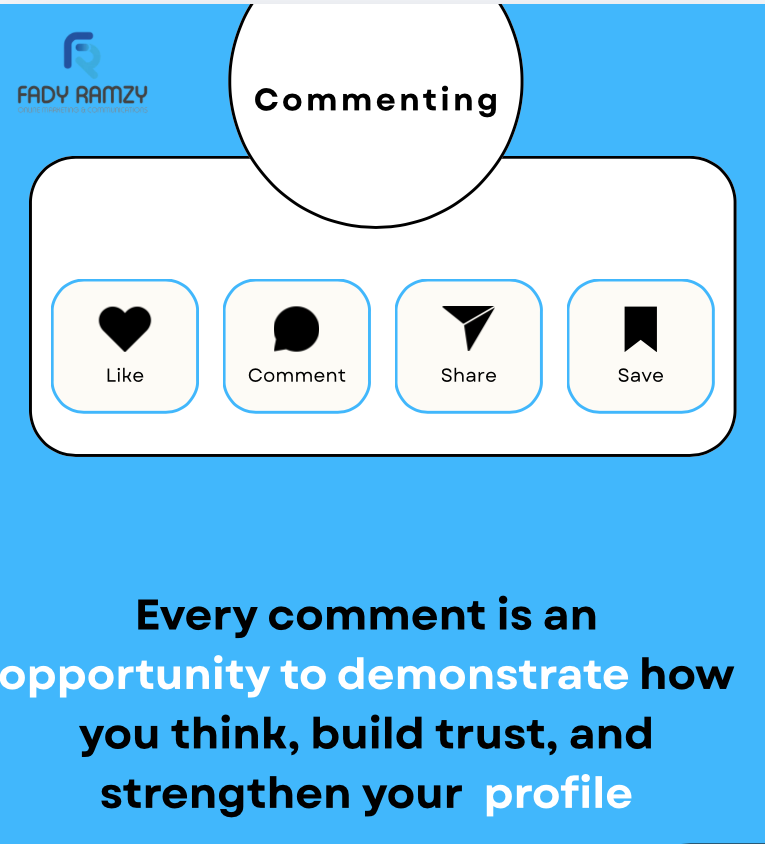
Here is something most people underestimate: commenting is a growth strategy.
Not generic commenting. Not “great post!” commenting. I mean thoughtful, specific, value-adding comments that make the original poster and everyone reading the thread stop and notice you.
When Marina and I talked about this, she was clear: daily engagement, ten to twenty meaningful comments per day, is one of the fastest ways to grow your presence on LinkedIn without spending a single dollar on ads.
How to Comment in a Way That Actually Works
- Add a perspective the original post did not cover. Extend the conversation.
- Share a short story or example that illustrates the point in a new way.
- Ask a question that invites the author and other readers to respond.
- Be specific. Vague agreement adds nothing. Specific insight adds everything.
Comments are a powerful strategy for LinkedIn for business growth. They boost visibility, build personal brand recognition, and when done well, they attract likes and increase your overall reach in ways that most people never think to leverage.
Who to Engage With
Do not just comment on posts from people who already follow you. Seek out:
- Potential clients in your target industry or role
- Influential creators whose audience overlaps with yours
- Peers and collaborators who are building in adjacent spaces
The goal is to show up consistently in the feeds of the people you want to work with. Over time, your name becomes familiar. Familiarity builds trust. Trust drives business.
This is not a hack. It is a relationship strategy. And it is one of the most underused levers in LinkedIn for business growth.
4. Lead Generation: Inbound and Outbound Strategies That Convert
This is where LinkedIn for business growth gets real. Visibility is great. Leads pay the bills.
There are two paths to generating leads on LinkedIn, and the most effective professionals use both simultaneously.
Inbound: Let Your Content Do the Selling
Inbound lead generation happens when your content attracts the right people to you. The key is creating content that speaks directly to your ideal client profile (ICP): their problems, their language, their goals.
When someone reads your post and thinks “this person understands exactly what I am dealing with,” they visit your profile. If the profile is optimised (see Strategy 1), they reach out. That is the inbound loop.
Outbound: Direct Messaging Done Right
Outbound is where most people go wrong. They connect and immediately pitch. That is the fastest way to get ignored or blocked.
The approach that actually works looks like this:
- Connect with a personalised note that references something specific about them.
- Engage with their content for a week or two before messaging.
- Open the conversation with genuine curiosity, not a sales pitch.
- Offer something valuable before you ask for anything.
- Move toward a call only after trust has been established.
I have written a detailed breakdown of four steps to generate leads on LinkedIn effectively that walks through this process with specific message templates and timing guidance.
The rule is simple: give before you ask. Relationships built on value convert far better than cold pitches.
Using both inbound and outbound together creates a pipeline that feeds itself. Your content attracts interest, and your outreach converts it. That combination is the core of sustainable LinkedIn for business growth.
5. Differentiation: How to Stand Out When Everyone Sounds the Same
Scroll through LinkedIn for five minutes and you will notice something uncomfortable: most people sound identical. The same advice. The same formats. The same motivational captions.
That sameness is your opportunity.
LinkedIn for business growth only works when people remember you. And people only remember you when you give them a reason to. Generic content creates zero memory. Specific, authentic, unexpected content creates recall.
The Differentiation Questions You Should Ask Yourself Weekly
- How can I say something true that most people in my space are afraid to say?
- What experience do I have that nobody else in my audience has lived through?
- What perspective do I hold that goes against the conventional wisdom in my field?
- What format have I never tried that might change how my content lands?
Storytelling as a Differentiation Tool
One of the most powerful ways to stand out is through storytelling. Not motivational fluff. Real stories with real stakes, real mistakes, and real lessons.
Stories do something that bullet-point advice cannot: they make people feel something. And when people feel something, they remember you.
If you have ever held back from sharing your story because you were not sure it was “professional enough” or “relevant enough,” I want you to read this piece on why storytelling matters and the techniques that make it work. It might change how you think about your content entirely.
Ask yourself constantly: “How can I do this differently?” That question, asked consistently, is the engine of differentiation.
The professionals who win at LinkedIn for business growth are not necessarily the most experienced. They are the most memorable. And memorability is a choice.
6. Platform Diversification: Why You Should Never Rely on LinkedIn Alone
LinkedIn is a powerful platform. It is also a platform you do not own.
Algorithms change. Accounts get restricted. Reach drops without warning. I have seen it happen to people who built their entire business on a single social channel, and the results are never pretty.
The smart approach to LinkedIn for business growth is to use LinkedIn as your primary discovery engine, then direct people toward assets you actually own.
What “Owned” Assets Look Like
- Your website or blog: where your best thinking lives permanently
- An email newsletter: a direct line to your audience that no algorithm can interrupt
- A course platform or community: where your most engaged followers become paying clients
LinkedIn gets people to discover you. Your owned assets are where the relationship deepens and the business actually happens.
How to Build the Bridge
You do not need to abandon LinkedIn. You need to use it strategically as a funnel:
- Post valuable content on LinkedIn to attract attention
- Direct engaged readers to a lead magnet, newsletter, or resource on your website
- Nurture that relationship through email or a community
- Convert through offers that live on your owned platform
This approach means that even if LinkedIn changes its algorithm tomorrow, your business does not collapse. Resilience is part of the strategy.
Use LinkedIn to build an audience. Use your owned channels to build a business. The distinction matters more than most people realize.
7. Personal Brand Strategy: How to Attract Opportunities Instead of Chasing Them
There is a version of LinkedIn for business growth that feels like constant hustle: pitching, posting, chasing, repeating. And then there is a version where opportunities come to you.
The difference is personal brand.
A strong personal brand acts like a magnet. It signals clearly who you are, what you stand for, and who you serve. When that signal is consistent and credible, the right people find you without you having to hunt them down.
The Foundation: Your Personal Value Proposition
Before you can build a brand, you need to know what your brand stands for. That starts with three questions:
- Who do you help? (Be specific. “Professionals” is not an answer.)
- What is their biggest challenge? (The one they would pay to solve.)
- What specific result do you help them achieve?
I have a dedicated guide walking through the three questions that build an effective personal value proposition. It is worth doing this work before you invest heavily in content or networking, because clarity at this level changes everything downstream.
For Executives and CEOs: The Stakes Are Higher
If you are a senior leader or executive, your personal brand is not just a marketing tool. It is a credibility signal that affects how boards, investors, clients, and future partners perceive you.
I have worked with many executives on exactly this, and the results speak for themselves. You can see how this plays out in practice through how 360Brew uses LinkedIn to amplify executive presence for CEOs. The principles apply whether you are building from scratch or refining what already exists.
A credible personal brand does not just support your LinkedIn for business growth goals. It becomes the reason growth happens.
8. Strategic Networking: How to Build a LinkedIn Network That Drives Real Business
Networking on LinkedIn is not about collecting connections. It is about building relationships that create mutual value over time.
I have seen people with 500 connections close more business than people with 20,000, simply because they invested in depth over breadth. The number on your profile means nothing if the people behind it do not know, like, or trust you.
How to Find the Right People to Connect With
LinkedIn gives you powerful search tools that most people barely use:
- Search filters: narrow by industry, job title, geography, company size, and more
- Connections of connections: some of the warmest introductions come from people already in your extended network
- LinkedIn’s suggested connections: each new connection you make triggers a batch of relevant suggestions
How to Turn a Connection Into a Relationship
The mistake most people make is connecting and then going silent. Here is a better sequence:
- Send a personalised connection request that mentions something specific about their work
- Engage with their content before sending any direct message
- Introduce yourself clearly when you do reach out: who you are, what you do, and why you wanted to connect
- Offer something useful before you ask for anything
- Look for collaboration opportunities: joint content, shared events, referrals, or introductions
Many of the best professional relationships I have built on LinkedIn started with a comment on a post and grew into something meaningful over months. That is not slow. That is sustainable.
A supportive network is one of the most underrated assets in LinkedIn for business growth. Having people who consistently engage with your content, refer you to others, and root for your success changes the trajectory of your visibility entirely.
9. Time Management: How to Use LinkedIn for Business Without It Taking Over Your Day
This is the strategy nobody talks about, but everyone needs.
LinkedIn can become a time trap. You open it to post something, and forty-five minutes later you are reading a thread about someone’s career pivot in a completely unrelated industry. Sound familiar?
Intentional time management is what separates people who use LinkedIn for business growth sustainably from people who burn out and go quiet after three months.
2 BONUS TIPS to use LinkedIn for Business Growth
-
Focus on Relevance, Not Vanity Metrics: Prioritize meaningful content and connections over superficial metrics.
-
Experiment with Content Formats: Try different content types to discover what resonates with your audience.
Ready to Turn Your LinkedIn Presence Into Real Business Growth?
Every strategy in this article works. But they work best when they work together.
Profile optimisation builds the foundation. Content builds trust. Engagement builds visibility. Lead generation converts it. Differentiation makes you memorable. Platform diversification makes you resilient. Personal brand makes you magnetic. Networking makes you connected. Time management makes it all sustainable.
That is the complete system for LinkedIn for business growth.
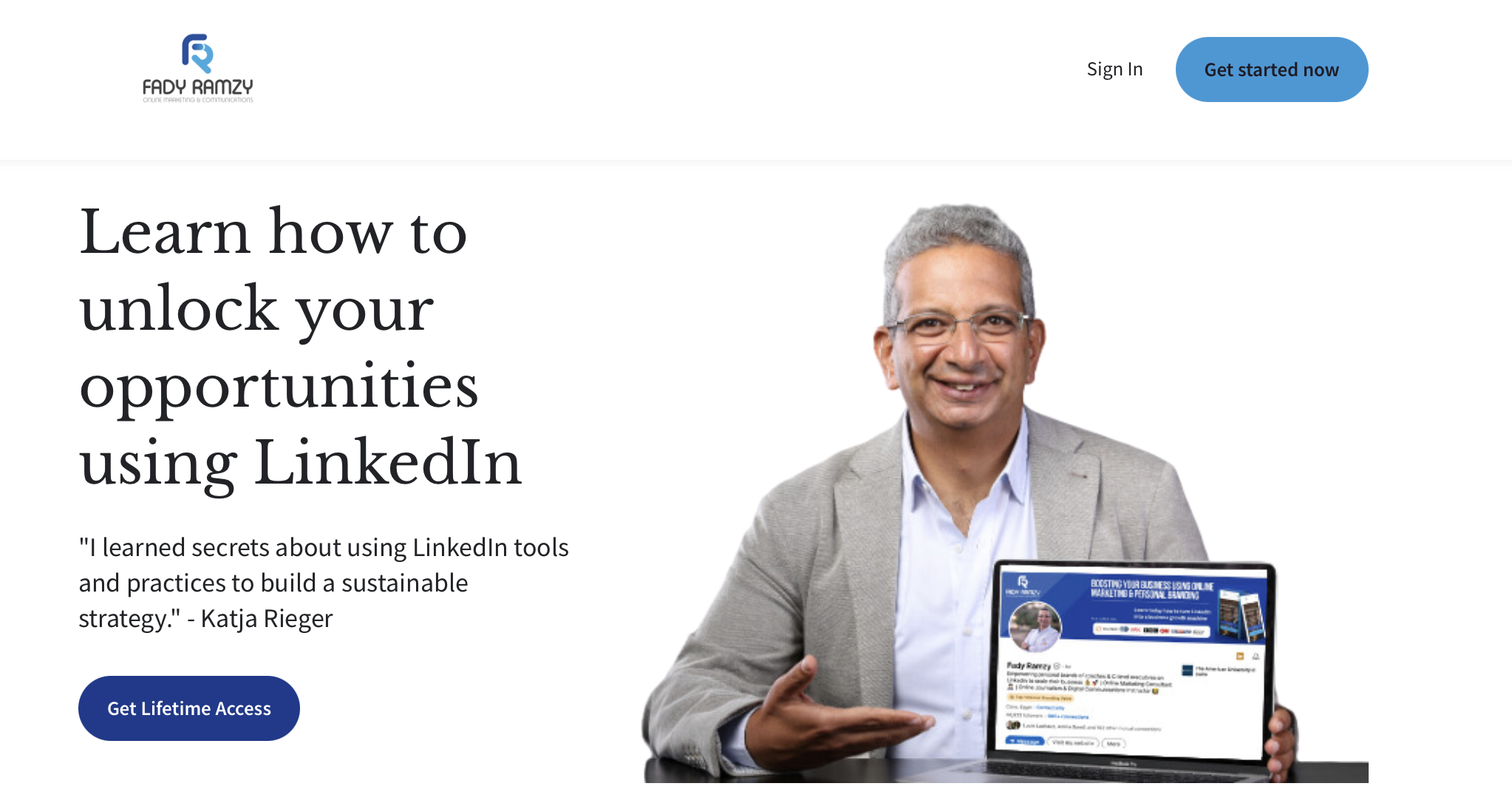
If you want to put this into practice with structure, accountability, and a clear roadmap, the LinkedIn Influence Accelerator is the place to start. Begin with the free quiz to discover where your personal brand stands today, and what it would take to turn it into the business asset it should be.
The professionals who win on LinkedIn are not the ones who figured out some secret. They are the ones who committed to showing up consistently, strategically, and authentically. That is available to anyone willing to do the work. Get your score here.
Start today.
Frequently Asked Questions About LinkedIn for Business Growth
Q1-What is the best first step for LinkedIn for Business Growth?
Start with your profile. A clear headline, banner, and About section tell people who you help and why you matter. Without that foundation, even strong content has nowhere to convert. Check out the LinkedIn profile essentials guide for a full walkthrough.
Q2-How often should I post for LinkedIn for Business Growth?
You do not need to post every day. Two to three strong posts per week is enough if you stay consistent, engage in comments, and keep your message focused on a specific audience and problem. Quality and consistency matter far more than volume.
Q3-Does storytelling matter on LinkedIn for Business Growth?
Yes, more than most people realize. Storytelling makes your expertise feel human and memorable. It helps people understand your perspective, trust your judgment, and connect your ideas to real business situations. Read more about why storytelling matters and the techniques behind it.
Q4-How do I turn LinkedIn engagement into actual leads?
Use comments and direct messages to start real conversations. Thank people who engage with your content, ask what they are working on, and move toward a call only after you have built genuine trust. The four-step LinkedIn lead generation framework covers this in detail.
Q5-Should I rely only on LinkedIn for business growth?
No. LinkedIn should be your primary discovery channel, but you should also direct people to owned assets like your website, newsletter, or course platform so you are not dependent on one network. Platform diversification protects your business.
Q6-What makes a personal value proposition useful on LinkedIn?
A strong value proposition clarifies your audience, their biggest challenge, and the specific result you help them achieve. That clarity improves your profile, your content, and your conversion potential. The three questions for building an effective personal value proposition is a good place to start.
Q7-Can LinkedIn for Business Growth work for executives and CEOs?
Absolutely. Executives often see strong results because their experience, perspective, and leadership stories create natural authority. The key is communicating with clarity, consistency, and relevance. See how 360Brew helps CEOs build executive presence on LinkedIn for a real-world example.
Q8-What is the LinkedIn Influence Accelerator and who is it for?
The LinkedIn Influence Accelerator is a course designed for professionals who want to turn their LinkedIn presence into a real business growth engine. It covers profile, content, lead generation, and personal brand strategy in a structured, actionable format. Start with a free quiz to discover the power of your personal brand in under two minutes.