From Executive Profile to Board Authority in 5 Simple Steps: LinkedIn Profile for Board Positions as a C-Suite Leader
Building A LinkedIn Profile for Board Positions
If you look at most executive LinkedIn profiles, you’ll notice something interesting. Oftentimes, they’re impressive, they’re accomplished, but they’re also forgettable. Simply, they’re not “Building A LinkedIn Profile for Board Positions”.
It is full of titles, promotions, long lists of responsibilities, and a timeline of career moves.
But here’s the problem: a strong career does not necessarily translate into a strong digital presence, and as for executives who aspire to serve on boards, that gap matters more than ever.
There is a major misconception where people think a LinkedIn profile is just a professional record, but that is surely not true anymore in this day and age. Instead, it is a positioning tool.
It’s how people evaluate how you think, what you stand for, and whether you bring the kind of perspective that belongs in a boardroom… And that’s the exact difference between an Executive Profile and a Board Authority Profile.

It all starts with the right mindset.
Often executives approach LinkedIn by asking: how do I summarize my experience? And that’s fine for documentation, but if your goal is to position yourself for board opportunities, then the better question is: What are the top three board competencies I bring to the table?
Take a moment to think beyond your title and function… That’s the first step to building a LinkedIn profile for board positions.
Are you known for guiding companies through transformation?
Do people rely on you when navigating risk or scaling into new markets?
Are you the person organizations turn to when strategic decisions need clarity?
A trick to discover this is by simply paying attention to what people consistently ask you advice about. This is the pattern that reveals the expertise others already see in you, even if you haven’t articulated it clearly on your profile yet.
Your Profile Picture Sets the Tone When Building A LinkedIn Profile for Board Positions.
While this may sound basic, it really does matter. Because before someone reads one word on your profile, they already form an impression based on your photo.
Hence, a strong headshot should feel professional, clear, and confident. It should not be overly staged, but intentional. Not overly casual, but approachable.
Basically, when someone lands on your profile, they should immediately feel they’re looking at someone who makes decisions, not just someone who executes them.
Read more on the Triangle of First Impressions.
Your Banner Is Your First Strategic Statement
After your photo, the banner is the next thing people notice.
Unfortunately, many executives leave it blank or fill it with a generic background image of corporate style buildings; instantly a missed opportunity when building a LinkedIn profile for board positions.
Look at your banner as being prime real estate. It should communicate, quickly and clearly, what you stand for professionally in a LinkedIn profile for board positions.
The most effective banners answer a specific solution for a specific problem addressing a specific audience. So basically, think of these 3 questions:
- What problem do you help solve?
- Who do you help?
- Why does your expertise matter?
This is the clarity you need to bring proper positioning through relevancy and relatability. Meaning, when someone visits your profile, and sees your banner, they should immediately understand the value you bring to the table.
Your Headline Should Not Be Your Job Title
This is one of the most common mistakes executives make. (Actually everyone!)
Firstly, your headline is not meant to be a duplicate of your business card. So while “CEO at Company X” or “CFO at Company Y” may be accurate, it says very little about the perspective you bring as a leader.
This is why your headliine should answer a more meaningful question: How do you see yourself professionally? Think about the role you play in helping organizations move forward.
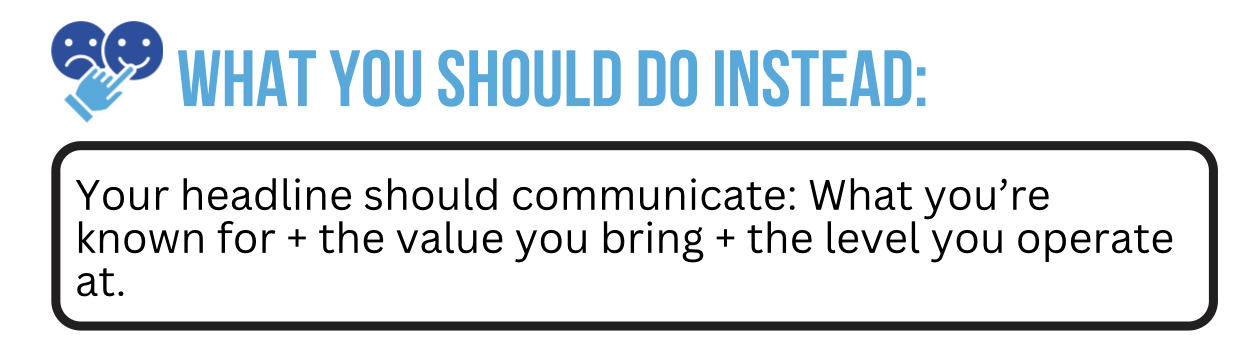
This goes hand in hand with noticing what people ask your advice on. Perhaps you help companies scale through partnerships, or maybe you guide organizations through transformation, or maybe your expertise lies in governance, risk management, or market expansion.
On a LinkedIn profile for board positions, your headline should capture that narrative by hinting at the kind of conversations you belong in.
Your About Section Is Your Leadership Story
Most About sections read like compressed résumés, filled with a list of accomplishments, a few numbers, and maybe a brief career summary.
But the About section is an opportunity to do something more interesting: explain how you think. Ask yourself, what kind of challenges excite you? What kinds of problems do you naturally gravitate toward solving? What perspective do you bring to leadership conversations?
This is an internal dialogue that can help you figure yourself out better and help you position yourself as a LinkedIn profile for board positions.
Because if you’re looking to be on a board, you need to showcase your judgement, perspective and how you can guide organizations through uncertainty.
Your Experience Section Should Focus on Impact
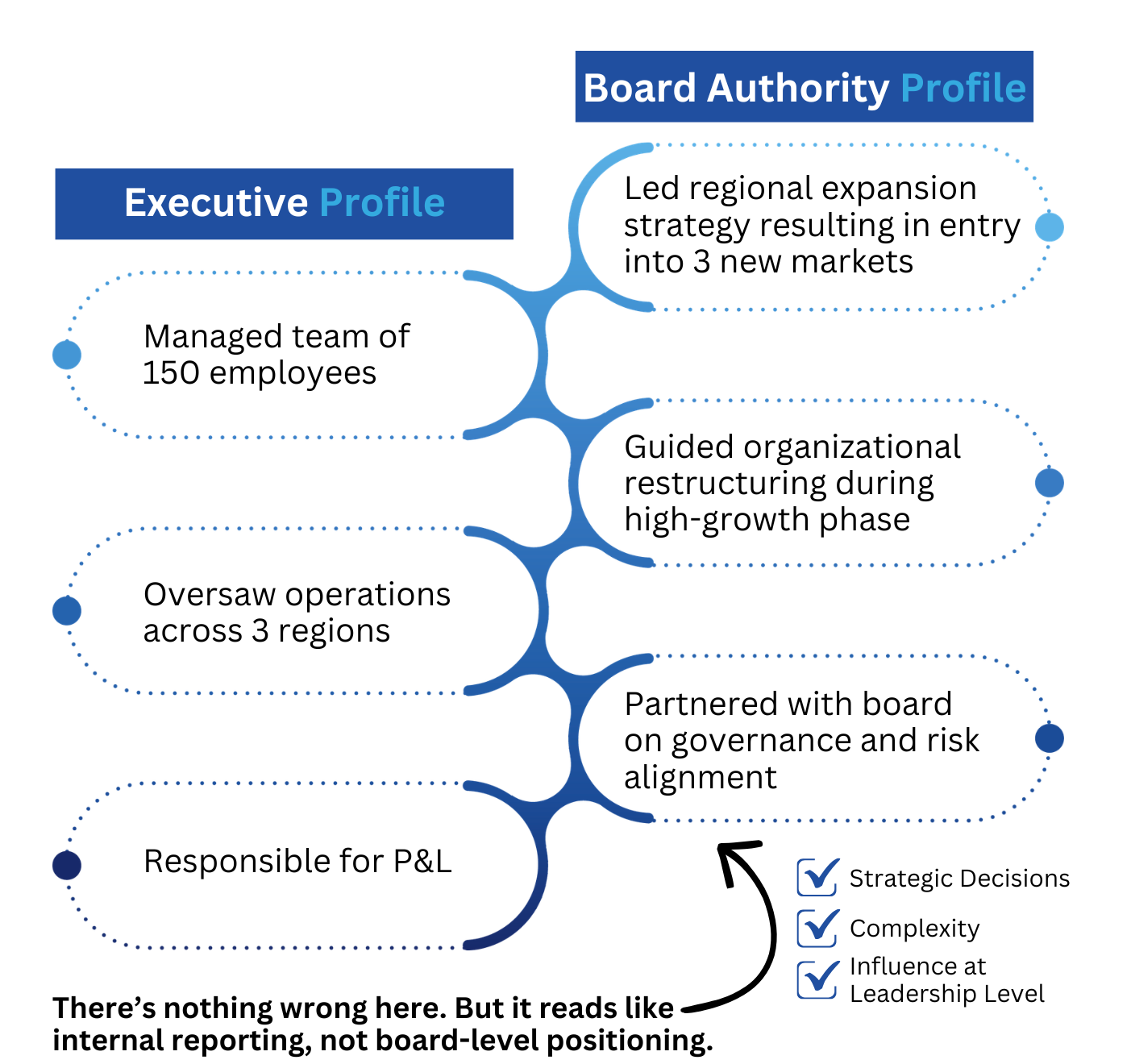
Let’s agree that there are two common extremes in the experience section. On one end of the spectrum, some profiles are so brief that they feel vague, and on the other end of the spectrum, some are so detailed that they read like internal job descriptions.
Newsflash: Neither of these work well when working on a LinkedIn profile for board positions.
What you’re aiming for is balance. What you need to do is highlight the strategic initiatives you led, the transformations you drove, and thee decisions that shaped outcomes. Instead of documenting your tasks in a listicle style, what you need to be doing is showing how you contribute to the bigger picture.
Add Strategic Volunteer Roles
When building a LinkedIn profile for board positions, one of the most overlooked sections on executive profiles is volunteer experience.
If you serve on nonprofit boards, advisory councils, or industry initiatives, those experiences demonstrate something important: that you’re already operating in environments that require governance, perspective, and accountability.
Moreover, it also gives people a fuller picture of your interests, values, and the kinds of communities you support.
Let’s Recap…Your Profile Is Your Narrative
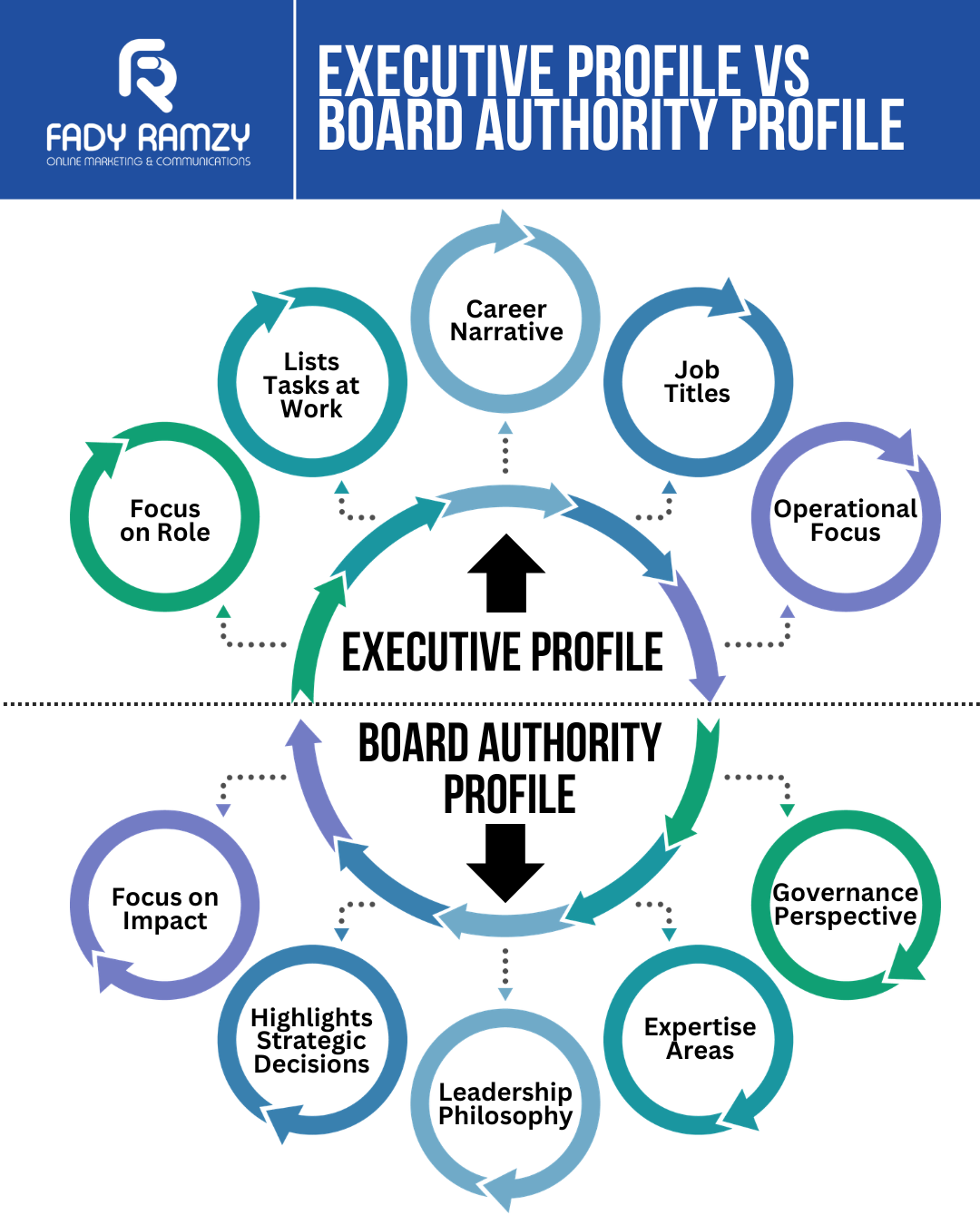
At its core, a LinkedIn profile is not just a collection of career milestones. It is YOUR narrative. It is a story about how you lead, how you think and how you contribute, and this is what helps you build a LinkedIn profile for board positions.
Once you shift your profile into someone that is an “experienced executive” to “potential board contributor”, the game changes and opportunities start to surface.