Political Humor and Leadership in 2026: Does Comedy Undermine Political Authority?
Jokes can go a long way, but what's the relationship between political humor and leadership?
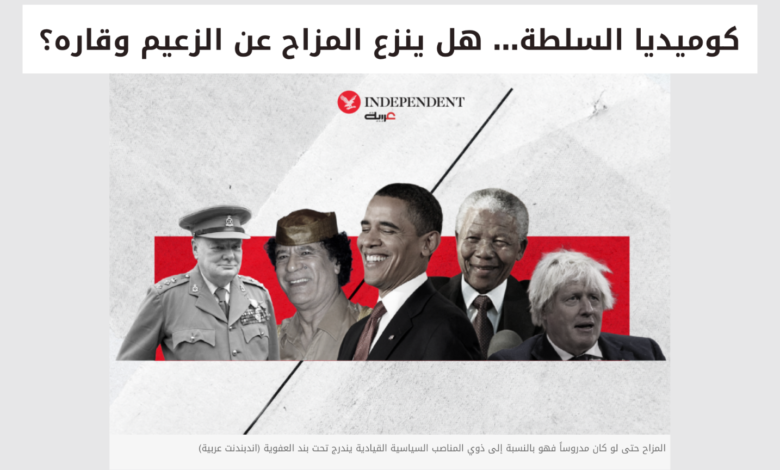
Humor in politics is a double-edged tool. On one hand, it can humanize leaders, bringing them closer to the public and revealing a level of intelligence, spontaneity, and confidence that formal speeches often conceal. On the other hand, it can blur boundaries, confuse seriousness with satire, and in some cases erode the gravitas that political leadership depends on. So what’s the relationship between political humor and leadership?
The central question, then, is not whether leaders should joke, but how far they can go before humor becomes a liability in political humor and leadership. Read More.
As highlighted in the translated article on political comedy, brief and spontaneous moments of humor from world leaders often become historical footnotes, shared widely by media and remembered as rare glimpses into otherwise tightly controlled public personas. Protocol and political etiquette grant leaders authority, but they also impose expectations of dignity, clarity, and restraint when it comes to political humor and leadership.
Humor as a Strategic Tool, Not a Personality Trait
In my view, humor in political leadership is most effective when it is incidental rather than continuous. A well-timed joke in a formal speech can humanize a leader and defuse tension. But when humor becomes a dominant communication style, the message risks losing clarity. The audience may no longer distinguish between seriousness and satire.
This is where political communication theory becomes relevant: clarity of message, respect for context, and preservation of institutional symbolism are foundational principles. Humor can exist within this framework, but only as long as it supports the message rather than replacing it.
Once humor becomes the message itself, political communication begins to lose precision and that when we have an imbalance between political humor and leadership.
Political Humor and Leadership: When it’s Misinterpreted
What makes political humor particularly complex is its dependence on interpretation. A joke that resonates positively in one cultural or political context may be perceived as offensive or irresponsible in another. This is why many governments rely on structured communication teams to “repair” unintended consequences of informal remarks when it comes to balancing between political humor and leadership.
I often observe that leaders who overuse humor risk placing their administrations in a reactive position; where spokespersons and advisors must constantly reinterpret or reframe statements that were meant to be lighthearted but are received as politically significant.
This is not just a matter of style; it is a matter of governance in political humor and leadership.
Churchill, Mandela, and the Discipline of Political Wit
Historical examples show that humor can be a powerful asset when used with discipline. Leaders such as Winston Churchill demonstrated that wit, when controlled, can enhance authority rather than diminish it. His humor was never accidental noise, it was precision communication wrapped in brevity.
Similarly, Nelson Mandela used humor not as performance but as reconciliation. His jokes carried emotional intelligence shaped by lived experience, particularly his years of imprisonment. In contrast, other leaders have struggled when humor became ambiguous or inconsistent with their political messaging.
The key distinction lies in intention: humor as strategy versus humor as identity.
How Social Media Changed Political Humor
In the digital age, humor has evolved from a private interpersonal tool into a public branding mechanism. Social media platforms reward personality visibility, often encouraging political figures to appear more casual, more relatable, and more entertaining.
As I have argued previously in discussions on digital media transformation, political branding has become inseparable from platform logic. Leaders are now expected to maintain a recognizable “personal brand,” often blending formal governance with informal online presence.
This shift creates opportunity, but also risk.
Figures such as Barack Obama demonstrated how controlled humor can strengthen political image and relatability. Others, like Boris Johnson or Justin Trudeau, leaned into stylistic humor and personal branding elements that gained initial popularity but later became politically weaponized by opponents, showing the power of using political humor and leadership.
The result is a new political paradox: the same humor that builds popularity can later be used to undermine credibility.
Political Humor as Capital – and as Liability
Today, humor functions as a form of political capital. It generates engagement, visibility, and emotional connection. But unlike traditional forms of authority, it is volatile. It cannot be fully controlled once released into the public sphere.
Even leaders known for sharp rhetorical humor, such as Donald Trump, illustrate how comedic style can evolve into a polarizing communication strategy, where humor blends with provocation and becomes part of political identity rather than a communicative tool.
This raises a critical question: when humor becomes a brand, does leadership lose its distance?
The Balance That Defines Political Leadership
Ultimately, political humor is not about being funny. It is about managing perception without destabilizing meaning. Successful leaders understand where the line lies between approachability and authority, between relatability and responsibility.
The most effective use of humor in politics is not the one that generates the loudest laughter, but the one that reinforces clarity without compromising credibility and that is how to powerfully use political humor and leadership.
Because in politics, unlike comedy, the audience is not just watching for entertainment. They are interpreting consequences